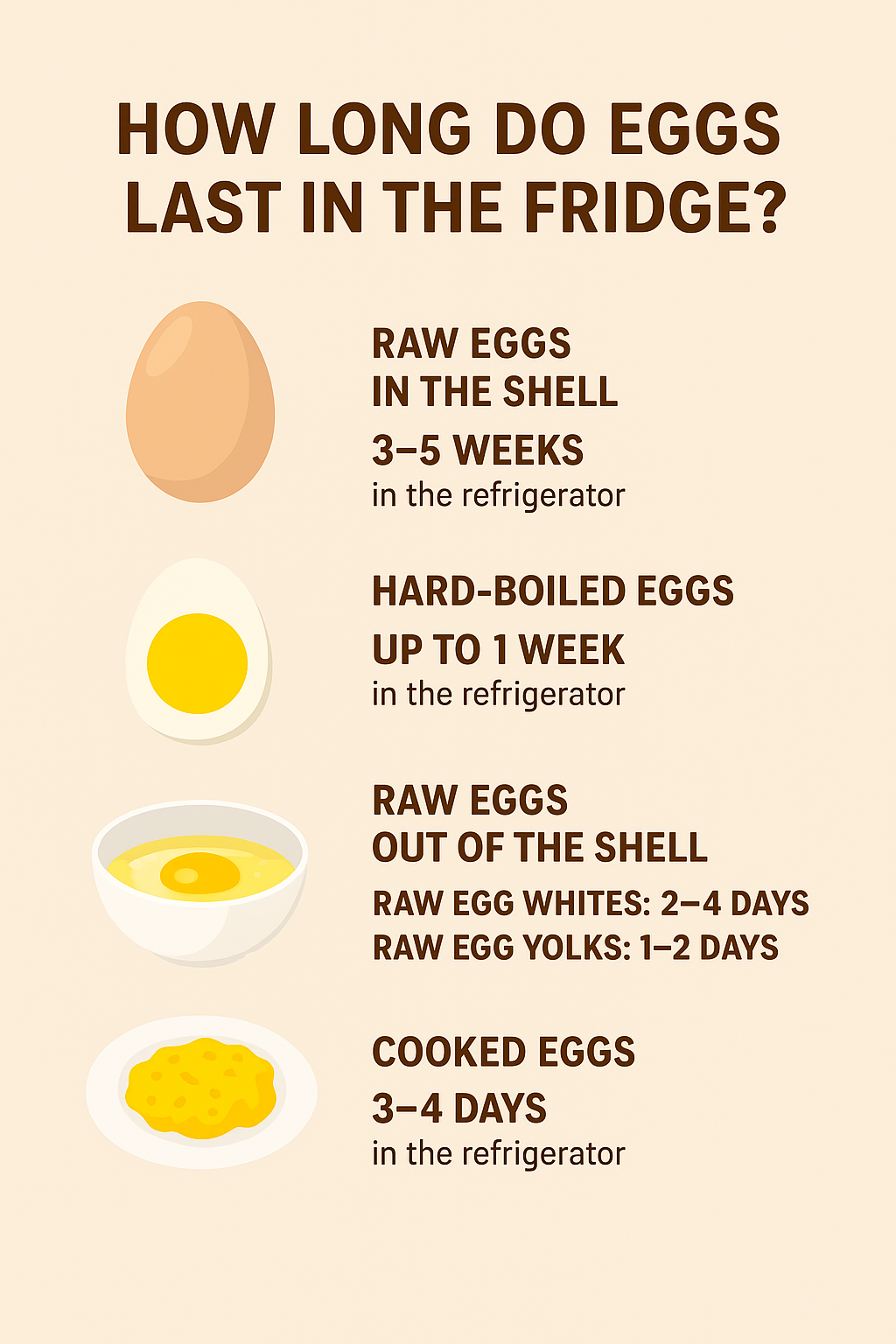

Eggs are a staple food in almost every household. They’re affordable, nutritious, and incredibly versatile. But because people buy them often in bulk, one common question comes up: How long do eggs last in the fridge? The answer depends on how fresh the eggs were when purchased, where they are stored, and whether they are raw or cooked.
In this complete guide, you’ll learn everything about egg shelf life, how to store them properly, signs eggs have gone bad, and tips to keep them fresh longer.
How Long Do Eggs Last in the Fridge?
Generally, raw eggs in their shells can last 3 to 5 weeks in the refrigerator after you bring them home. In many cases, they even stay safe for up to 6 weeks, depending on how fresh they were at the time of purchase.
Here’s a detailed breakdown:
1. Raw Eggs in the Shell
- Last 3–5 weeks in the fridge
- Best stored in their original carton
- Keep them on a middle or lower shelf, not in the door
2. Raw Eggs Out of the Shell
If you crack eggs and store them:
- Raw egg whites last 2–4 days
- Raw egg yolks last 1–2 days
3. Hard-Boiled Eggs
- Last up to 1 week in the fridge
- Must be refrigerated within 2 hours of cooking
- Best kept in a covered container
4. Cooked Eggs (Scrambled, Omelets, etc.)
- Last 3–4 days in the fridge
- Store in airtight containers for best freshness
5. Egg-Based Dishes (Quiche, Casseroles, Custards)
- Last 3–4 days
Why Eggs Last Longer Than You Think
Eggs naturally come with a protective coating called the “bloom” that prevents bacteria from entering the shell. In many countries, this protective layer remains intact, allowing eggs to last longer.
In places where eggs are washed (like the U.S.), the bloom is removed, so eggs are always refrigerated to stay safe. Even then, their shelf life in the fridge is surprisingly long.
Where Should You Store Eggs in the Fridge?
Many people make a common mistake—they store eggs in the fridge door. This is not recommended because the door experiences temperature changes each time it opens.
Best place to store eggs:
- On a middle or bottom shelf
- In the original carton
- Away from strong-smelling foods (eggs can absorb odors)
The carton helps protect eggs from absorbing smells and prevents moisture loss.
How to Tell If Eggs Are Still Good
Even with a long shelf life, it’s important to know whether your eggs have expired. Here are reliable ways to check.
1. The Float Test
Fill a bowl with water and gently place the egg inside:
- Fresh eggs sink and lie flat
- Slightly older eggs stand upright but still sink (safe to eat)
- Bad eggs float (throw them away)
This happens because older eggs have more air inside.
2. Smell Test
A rotten egg has a strong, unmistakable sulfur smell. If it smells bad after cracking, discard it immediately.
3. Visual Inspection
Look for:
- Cracks
- Powdery appearance
- Slimy texture
- Unusual colors
If anything looks off, it’s better to throw the egg out.
4. Check the Julian Date
Most egg cartons include a three-digit number called the Julian date, showing the day of the year the eggs were packed. Eggs are generally safe for 4 to 5 weeks after this date when refrigerated.
Why Eggs Go Bad in the Fridge
Even with proper storage, eggs eventually spoil due to:
- Temperature changes
- Time
- Bacteria entering through micro-cracks
- Absorption of odors or gases
- Moisture loss through the shell
Proper storage can slow this process significantly.
How to Make Eggs Last Longer
Here are simple ways to extend their freshness:
1. Keep Them Cold
Store eggs at 4°C (40°F) or below. Avoid leaving them out of the fridge for more than 2 hours.
2. Store in the Original Carton
Egg cartons help:
- Reduce moisture loss
- Block odors
- Cushion them from cracks
3. Avoid Washing Eggs
If your eggs are unwashed (common outside the U.S.), do not wash them until right before using. Washing removes the natural protective coating.
4. Freeze Eggs for Long-Term Storage
Yes, you can freeze eggs—but not in their shells.
How to Freeze Eggs:
- Beat eggs until blended
- Pour into freezer-safe containers
- Store for up to 1 year
You can freeze separated whites and yolks too. Whites freeze well; yolks freeze better with a pinch of salt or sugar mixed in.
Do Eggs Last Longer Than the Expiration Date?
Yes—most of the time.
Egg cartons usually have:
- “Sell by” date → For stores
- “Best by”/“Use by” date → Quality, not safety indicator
Eggs are often safe 3–5 weeks past the “sell by” date, as long as they are kept refrigerated. The float test is more reliable than the printed date.
Common Misconceptions About Egg Storage
Myth 1: Eggs can be kept at room temperature for days
Reality: In warm climates, bacteria multiply faster. Always refrigerate eggs.
Myth 2: Hard-boiled eggs last as long as raw eggs
No—boiling removes the protective coating, so they spoil faster.
Myth 3: Washing eggs makes them safer
Washing actually makes eggs more vulnerable to bacterial contamination unless done professionally.
Final Thoughts
So, how long do eggs last in the fridge?
- Raw eggs in shells: 3–5 weeks
- Boiled eggs: 1 week
- Raw whites/yolks: 1–4 days
- Cooked eggs: 3–4 days
- Frozen eggs: Up to 1 year
Eggs are one of the longest-lasting refrigerated foods, especially when stored properly. Keep them cold, leave them in their carton, and use simple freshness tests before eating.