
If you have ever watched a big race on TV or seen runners training in your neighborhood, you may have wondered: How long is a marathon? Whether you’re planning to run one or are simply curious, understanding the official marathon distance — and the history behind it — can be both interesting and inspiring. In this detailed guide, we break down the exact length of a marathon, how long it takes most people to finish, why the race has this specific distance, and tips if you’re thinking about running one yourself.
What Is the Official Distance of a Marathon?
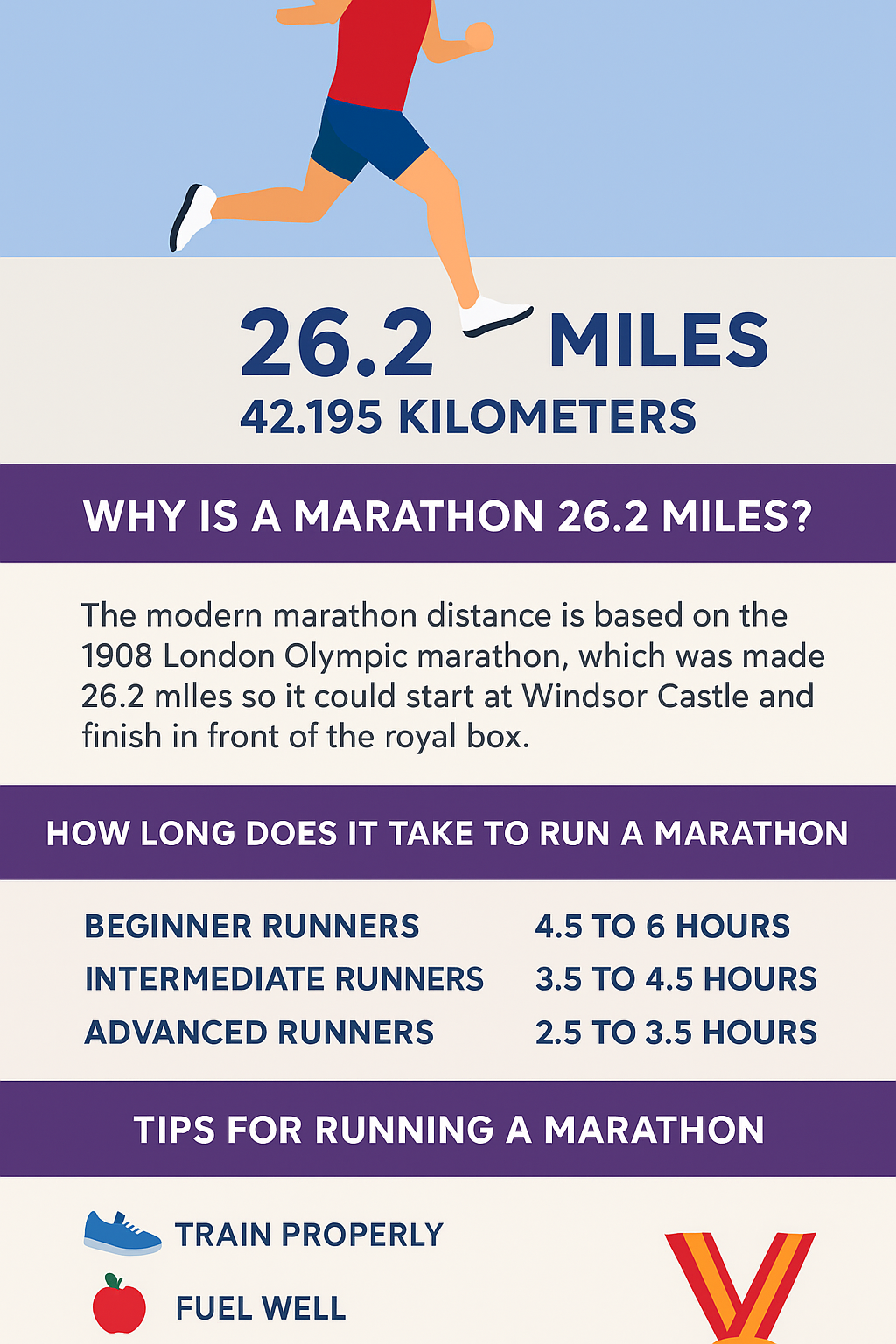
The official marathon distance is 26.2 miles, which is 42.195 kilometers.
This distance is recognized globally and is used in every major marathon around the world, including:
- Boston Marathon
- London Marathon
- New York City Marathon
- Berlin Marathon
- Tokyo Marathon
- Chicago Marathon
No matter where the event is held, the length always remains the same: 26 miles and 385 yards.
Why Is a Marathon 26.2 Miles? (Interesting History)
The marathon’s unique distance has a rich and somewhat dramatic history. The event is inspired by an ancient Greek legend about Pheidippides, a messenger who ran from the city of Marathon to Athens (about 25 miles) to deliver news of victory in battle.
However, the modern distance of 26.2 miles was set in 1908 during the London Olympics. The British royal family wanted the race to start at Windsor Castle and finish directly in front of the royal viewing box in the Olympic stadium. This added extra yardage, creating the distance we use today.
In 1921, the International Amateur Athletic Federation officially standardized the marathon distance to 42.195 kilometers (26.2 miles).
How Long Does It Take to Run a Marathon?
Finishing times vary greatly depending on a runner’s experience, training level, age, and health. Here’s a general breakdown:
Average Marathon Finish Times
- Beginner runners: 4.5 to 6 hours
- Intermediate runners: 3.5 to 4.5 hours
- Advanced runners: 2.5 to 3.5 hours
World Record Times
- Men’s record: Around 2 hours, 1 minute
- Women’s record: Around 2 hours, 14 minutes
Walking a Marathon
Yes, many people walk marathons too!
- Average walking time: 6.5 to 9 hours
Most official marathons have a cutoff time of 6 to 7 hours for safety and road-closure reasons.
How Many Steps Are in a Marathon?
This depends on your stride length, but on average:
- Running: 30,000–40,000 steps
- Walking: 50,000–60,000 steps
Training properly is essential, because completing tens of thousands of steps in one race is no small task.
How Hard Is It to Run a Marathon?
Running a marathon is challenging but achievable for most people with consistent training. The difficulty comes from:
- Physical endurance
- Mental strength
- Proper nutrition and hydration
- Weather conditions
- Elevation changes in the course
The last 6 miles are often the toughest, and many runners hit what is known as “the wall,” where energy levels drop sharply due to depleted glycogen stores. That’s why proper fueling is so important.
Training Requirements for a Marathon
Most beginners train for 16 to 20 weeks before race day. A typical plan includes:
1. Long Runs
Once a week, gradually increasing the distance (up to 18–20 miles).
2. Shorter Runs
2–3 training runs during the week to build stamina and speed.
3. Cross-Training
Cycling, swimming, strength training, or yoga to prevent injuries.
4. Rest Days
Essential for muscle recovery and progress.
5. Nutrition
Runners must focus on:
- Balanced meals
- Carbohydrate intake
- Proper hydration
- Race-day gels or snacks
With the right preparation, even someone who has never run long distances can successfully complete a marathon.
Why Do People Run Marathons?
Marathons are popular worldwide because they offer a unique combination of physical and emotional rewards. People run marathons to:
- Challenge themselves
- Improve fitness
- Support charities
- Join a global running community
- Achieve a lifelong goal
- Earn a finisher’s medal
- Improve mental strength
Finishing a marathon is considered one of life’s most satisfying achievements.
Famous Marathons Around the World
If you’re dreaming of running one someday, these are among the most iconic:
1. Boston Marathon
The oldest annual marathon in the world, famous for its strict qualifying times.
2. New York City Marathon
The world’s largest marathon, with over 50,000 finishers.
3. London Marathon
Known for huge cheering crowds and charity runners.
4. Berlin Marathon
Popular for world record attempts due to its flat course.
5. Chicago Marathon
Fast, friendly, and scenic.
6. Tokyo Marathon
A modern and culturally rich race experience.
These events attract runners from more than 100 countries, making them global celebrations of endurance.
Interesting Marathon Facts
- The human body burns 2,600 to 3,500 calories during a marathon.
- Over 800 marathons are held worldwide each year.
- The youngest marathon runner ever recorded was 5 years old (historical case, not allowed today).
- Many runners lose 1 to 3 liters of sweat during a marathon.
- The oldest recorded marathon finisher was 100 years old.
Should You Run a Marathon?
If you have the desire, discipline, and time to train, then absolutely — yes!
Running a marathon can transform your fitness, confidence, and mindset. The journey is just as rewarding as crossing the finish line.
Final Answer: How Long Is a Marathon?
A marathon is 26.2 miles, or 42.195 kilometers, a distance standardized in 1921. It typically takes runners 3 to 6 hours to finish, depending on experience and fitness level.
Whether you want to run your first marathon or simply wanted a clear answer, this iconic distance remains one of the greatest tests of human endurance.